


Getty Image
As an unbridled winter hater, I will be the first to tell you how awful the long, cold days without seeing the sun are between late-November and early March in the Northeastern United States.
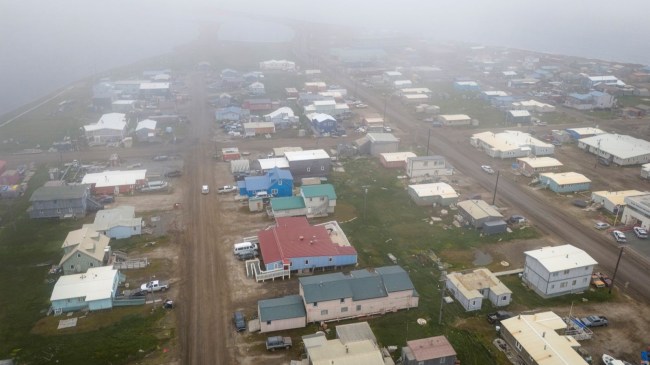
But it could be worse! You could be a resident of Utqiagvik, Alaska, which was known as Barrow up until December of 2016. Beginning on November 19, Utqiagvik entered what is called the Polar Night, an over two-month period where the town of nearly 4,600 residents will not see direct sunlight.
🚨: The Sun has officially set in Barrow, Alaska, and it won’t rise again until January 22, 2026. pic.twitter.com/qCiSzYiexU
— All day Astronomy (@forallcurious) November 20, 2025
Why Does Alaska Have A Polar Night?
The next day that the sun will shine on the town, which sits over 300 miles north of the Arctic Circle, is not until January 22, 2026.
So why does the northernmost city in the United States go so long without seeing the sun? The science is fairly simple. The Northern Hemisphere tilts away from the sun between the September and March equinoxes, which causes daylight at latitudes in the far north to gradually fade and reach its extremity around the Winter solstice.
There is good news, however! Alaska has what’s called the Polar Day, or Midnight Sun.
In the summer, particularly around the solstice, the sun often shines throughout the night, giving citizens full days of sunlight at a time. However, the number of days varies from year to year.
So yes, if you live in the northern contiguous United States, it may seem as if you’ll never see the sun again. But it can always be worse.