


Pokraky/iStockphoto
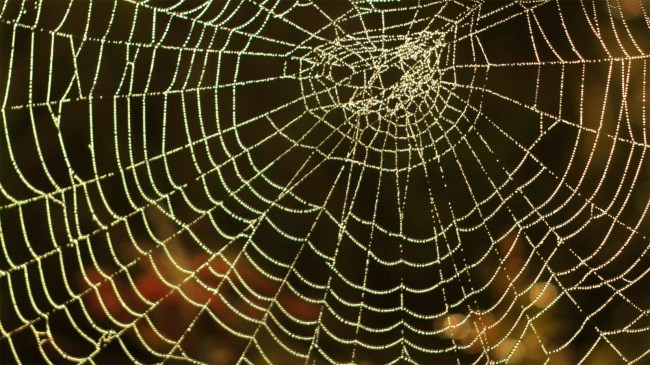
Scientists recently found more than 111,000 spiders living in what is being called the world’s biggest spiderweb. The gigantic web was discovered in the “Sulfur Cave” on the border of Albania and Greece.
Covering 1,140-square-feet, the massive spiderweb is actually a combination of an untold number of thousands of individual webs. The web was located in a low-ceilinged passage about 50 meters from the cave entrance that never receives light.
Genetic samples revealed that about 69,000 of the spiders are Tegenaria domestica, barn funnel weavers or domestic house spiders. The other 42,000 or so are Prinerigone vagans, a type of sheet weaver. It is the first documented case of colonial web formation in these species.
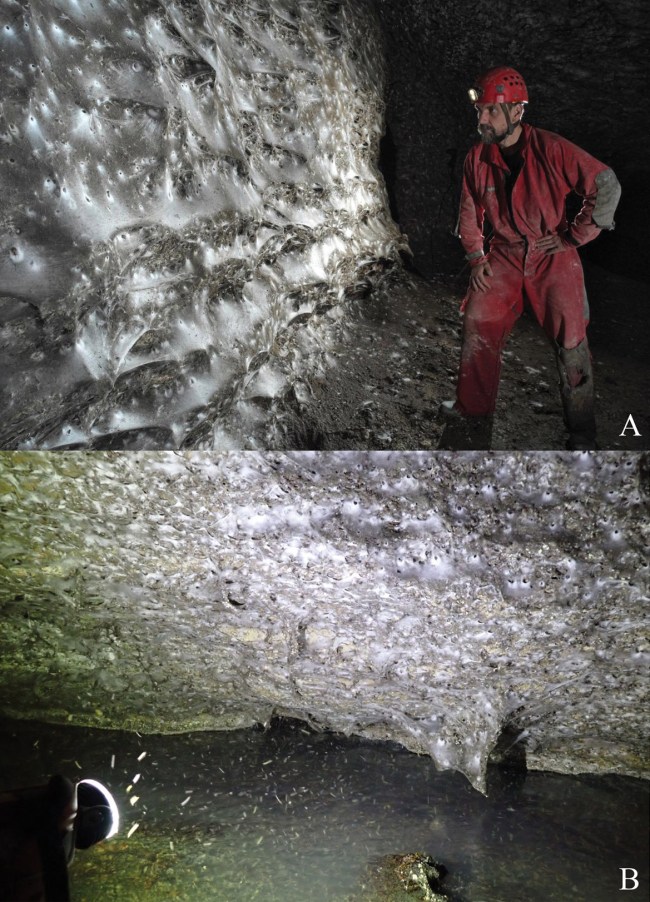
“While frequently found in caves across Europe and considered a characteristic species for Balkan caves, prior literature did not describe T. domestica exhibiting gregarious behavior and forming large colonial webs,” the researchers wrote. “The species typically builds a web resembling an open-cut funnel, with a tubular retreat open on both ends and its edge widening on one side to form a sheet-like capture surface.”
The massive spiderweb unlocked numerous unique discoveries
The researchers believe the absence of light in the cave contributed to the two species of spiders being able to co-habitate. Normally, the presence of P. vagans would have elicited a “predatory response from T. domestica.”
“We hypothesize that the absence of light impairs the visual detection capabilities of T. domestica, rendering the small P. vagans inconspicuous, particularly given P. vagans stationary ambush predatory strategy with brief movements when prey items are in close proximity within the web,” they wrote in their study, published in the journal Subterranean Biology.
The scientists also noted that “a dense swarm of adult chironomid flies fills the air” near the cave entrance. This large swarm of flies helps feed the giant spider colony. The researchers estimated there may be as many as 2.4 million flies in that section of the cave.
Female house spiders typically lay “six to eight egg sacs” every 20 to 25 days. So the researchers were unable to determine how many thousands of egg clutches were on the huge spiderweb.
“Often, we think we know a species completely, that we understand everything about it, yet unexpected discoveries can still occur,” study lead author István Urak, an associate professor of biology at Sapientia Hungarian University of Transylvania in Romania, told Live Science. “Some species exhibit remarkable genetic plasticity, which typically becomes apparent only under extreme conditions. Such conditions can elicit behaviors that are not observed under ‘normal’ circumstances.”