


iStockphoto
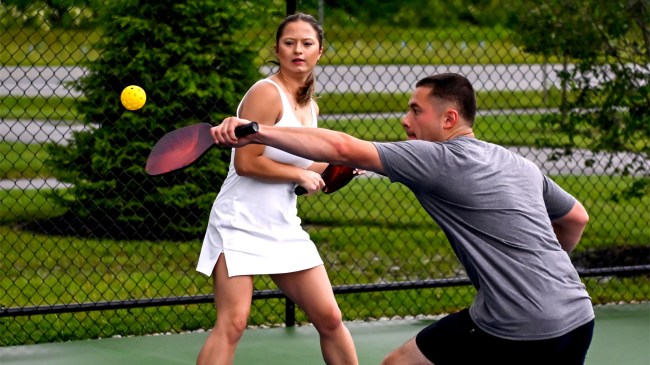
A new study reveals pickleball eye injuries caused by balls traveling at high rates of speed and by being hit in the face with paddles are on the rise. The study also blames the small court size used in the sport as a significant contributor to these injuries.
The study, published this week in the journal JAMA Ophthalmology, used the National Electronic Injury Surveillance System (NEISS) database published by the U.S. Consumer Product Safety Commission. This data is based on a nationally representative sample of hospitals with emergency departments in the United States.
In looking at reported pickleball-related eye injuries from 2005 to 2024, the researchers found 3,112 cases. More than 40 percent of those injuries were reported in 2024, and none were reported before 2014. When whittling the data down to the zenith of the pickleball craze, 88% of eye injuries were reported from 2022 to 2024. The study also discovered that 70% of all of the pickleball-related eye injuries were reported in players 50-years-old or older.
Pickleball-related eye injury causes and prevention
“Although the increase in ocular injuries may simply reflect the increasing number of players, it is also possible that casual players are more susceptible to injury due to limited experience, unfamiliarity with the game, or lower level of physical fitness,” the study’s authors wrote.
Among the severe eye injuries suffered by pickleball players in the data that was studied were retinal detachment, orbital fracture, globe trauma, and hyphema. Causes of the eye injuries included a direct hit by a pickleball, a direct hit by a paddle, and falls.
“This study found that pickleball-related eye injuries have increased at an alarming rate over the past 4 years as the sport continues to grow in popularity,” the authors concluded. “Eye protection is not currently mandated for casual or professional play. Establishing standardized guidelines for eye protection is recommended to reduce the risk of ocular injuries among players.”
Previous studies on pickleball-related eye injuries
A previous 2025 study on pickleball-related eye injuries simulated blunt trauma to the eye caused by a pickleball. That analysis revealed that at velocities exceeding 30 mph, “the rigid, hard-plastic construction of a pickleball results in concentrated stress and strain transfer to ocular structures upon impact.”
The authors of that study suggested better “education on the importance of wearing protective eyewear and optimizing game rules to minimize high-risk scenarios, such as close-range volleys.”
“Players might not realize that the use of perforated plastic balls during the course of the game can transform into high-speed projectiles when hit between players,” Marisa Tieger, MD, at Tufts Medicine, stated in a 2024 study on pickleball-related eye injuries.
Amy Coburn, MD, at Houston Methodist Blanton Eye Institute, said teams of doubles or triples crowd the court further, increasing the risk of accidental collisions, falls, and ricocheted balls. The more crowded the court, the more likely a paddle could “smash into the eye or adnexa.”